
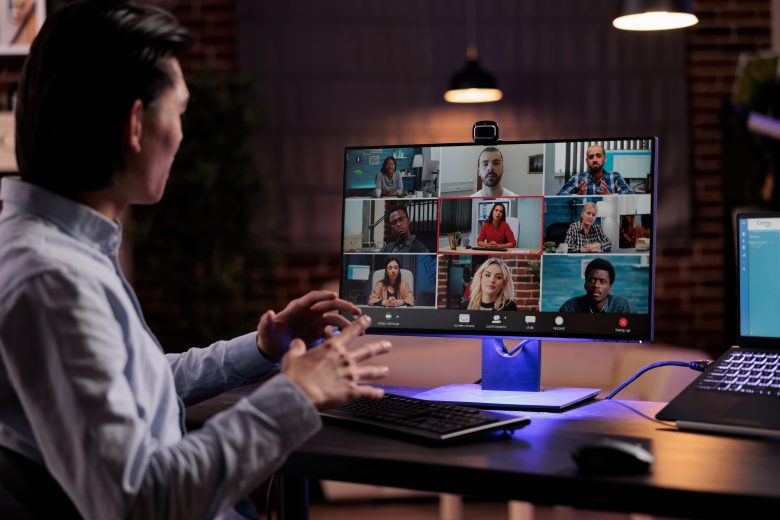
Virtual Conference Platform: Key Features for Scalable Global Business Events
Not long ago, global conferences were defined by geography. Air travel, packed agendas, exhibition halls, and the quiet hierarchy of who could afford to be in the room. Access was physical. Scale was logistical. And reach, no matter how ambitious, had limits. That model no longer holds.
Today, a keynote delivered in one city can be watched in fifty countries live, on demand, and across devices. A panel discussion can host speakers from three continents without anyone boarding a flight. And a product launch can generate global traction in real time.
This isn’t just the rise of virtual events. It’s a redefinition of what a “business event” actually is. At MultiTV, this shift is not just observed but actively engineered through platforms designed to support global, scalable, and immersive virtual event experiences.
From Venue-Led to Experience-Led
The shift toward virtual conferences is often framed as a response to necessity. In reality, it’s a response to opportunity.
The global virtual events market is expected to reach over $500 billion by 2030, growing at a significant pace as organizations continue to prioritize digital-first engagement. Meanwhile, a majority of businesses now incorporate virtual or hybrid formats into their event strategies.
The implication is clear: virtual events have now become a strategic channel. For global organizations, this shift unlocks something powerful, i.e., access without boundaries. Events are no longer constrained by venue capacity, travel budgets, or time zones in the same way. They are designed for reach, flexibility, and continuity. For platforms like MultiTV, this evolution has meant building solutions that prioritize not just reach, but experience continuity across geographies and devices.
But scale alone doesn’t define success. Experience does.
What Actually Defines a Strong Virtual Conference Platform
The most effective platforms don’t overwhelm with features; they solve for friction. Take communication, for instance. At the core of every virtual conference is the ability to connect people in real time, and high-quality video conferencing services have become non-negotiable. Poor audio, lagging video, or unstable connections don’t just disrupt sessions; they dilute credibility.
But communication alone isn’t enough when scale enters the picture. Large global events often require an event live streaming service that can support thousands of concurrent viewers without compromising quality. According to industry estimates, high-traffic virtual events can see participation spikes of 3-5x within minutes, making scalability a critical requirement. Then comes the question of engagement.
One of the most persistent myths about virtual events is that they lack interaction. In reality, the opposite is true when designed correctly. Features like live Q&A, polls, breakout rooms, and networking lounges don’t just replicate in-person interaction; they often enhance it by making participation more accessible.
The real challenge becomes integration. When these elements work together, the event feels seamless. When they don’t, the experience breaks. This is precisely where integrated platforms like MultiTV’s event technology ecosystem create a measurable difference by unifying these layers into a single experience.
Why Infrastructure Matters More Than Ever
Behind every seamless virtual conference is a layer most attendees never see: infrastructure. Delivering a global event requires more than just a front-end interface. It demands a backend capable of handling high concurrency, ensuring low-latency streaming, and maintaining consistent performance across devices and geographies. This is particularly critical for enterprise-scale events like investor meetings, global town halls, or international summits where reliability is directly tied to brand perception.
As virtual conferences become more common, audience expectations are evolving just as quickly. Attendees now expect seamless access across devices, high-definition interruption-free streaming, opportunities to interact, and content that is available beyond the live session. This moves virtual events from being “sessions people attend” to “experiences people engage with.”
And that changes how platforms need to perform.
Where MultiTV Fits Into This Shift
At MultiTV, this evolution has been central to how virtual event solutions are designed. Global conferences today require more than isolated tools. They require integrated ecosystems that can support communication, streaming, and engagement at scale.
Our approach combines video conferencing services, scalable event live streaming service infrastructure, and corporate event live streaming capabilities to enable seamless virtual experiences.
The focus is not just on enabling events but on ensuring they perform consistently, regardless of audience size or location. Whether it’s a high-stakes corporate announcement or a multi-day international conference, the objective remains the same: deliver clarity, continuity, and quality at every touchpoint.
What Comes Next
What’s happening in the events industry is part of a larger shift. Events are no longer isolated moments in time. They are continuous engagement ecosystems extending before, during, and after the live experience. Virtual conference platforms sit at the center of this transformation.
They determine not just how events are delivered, but how they are remembered.
We’re already seeing early signals of this transformation. AI-driven networking, personalized content journeys, and deeper analytics are beginning to reshape how events are experienced and measured.
Personalization and data-driven engagement are becoming key differentiators across digital experiences, and events are no exception. In the near future, virtual conference platforms will not only host events but also adapt in real time to audience behavior and preferences.
Final Thought
The move to virtual is about expanding what events can do. For global businesses, the opportunity is not just to reach wider audiences but to create more meaningful, measurable, and scalable experiences.
And that starts with choosing the right platform. In a digital-first world, the platform isn’t just where the event happens.
It becomes the event itself.
